Dairy Queen Allergen Menu – The Only Guide You Actually Need
The Dairy Queen allergen menu isn’t as simple as avoiding the obvious. Most guides hand you a table and call it done. This one goes further. If you’re dealing with a peanut allergy, gluten sensitivity, or dairy intolerance, here’s exactly what’s in your food, what equipment it touched, and which items are actually safe to order.
Start Here: The Honest Truth About DQ Kitchens
Dairy Queen cannot guarantee that any menu item is free from allergens. That’s not legal fine print – it’s the reality of how the kitchen operates. Shared fryers, Blizzard machines that cycle through dozens of toppings without deep cleaning, open prep surfaces, and continuous soft serve nozzles mean that allergen proteins move around freely.
Knowing this doesn’t mean you can’t eat at DQ. It means you go in with clear eyes.
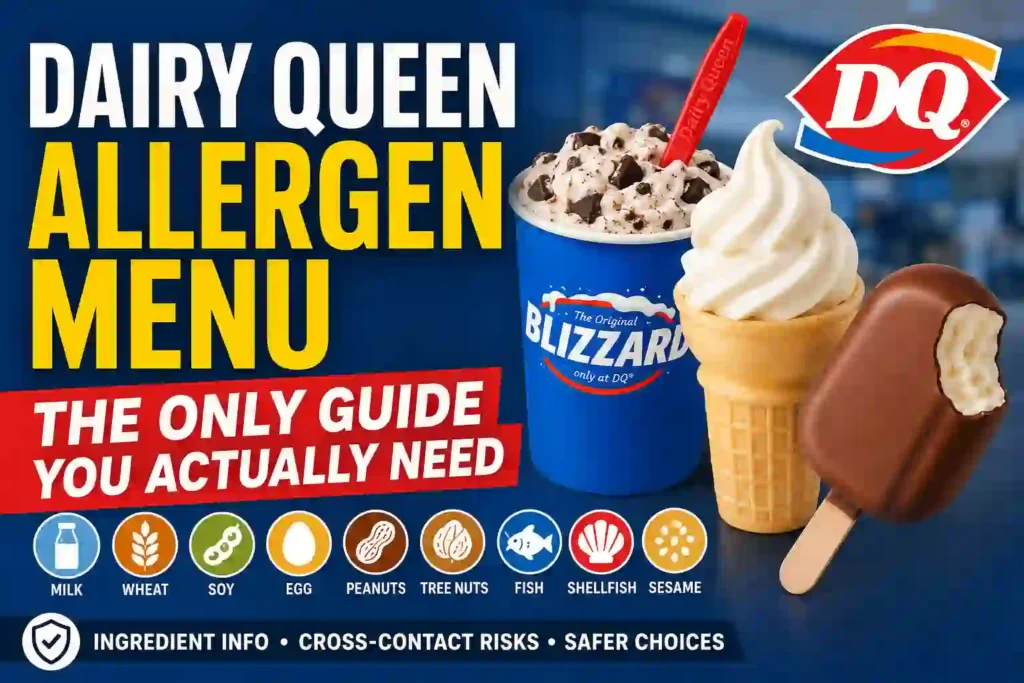
The 9 Allergens DQ Tracks
| Symbol | Allergen | Where It Hides Most |
|---|---|---|
| M | Milk | Soft serve, Blizzards, shakes, cakes, cheese |
| W | Wheat | Buns, breaded chicken, hot dogs, and some sauces |
| S | Soy | Soft serve base, frying oil, buns, and marinades |
| E | Egg | Breaded items, mayo, ranch, honey mustard |
| P | Peanut | Blizzard mix-ins, Reese’s/Butterfinger toppings |
| T | Tree Nuts | Specialty Blizzards, cake decorations |
| SS | Sesame | Buns at most locations (added 2023 under FASTER Act) |
| F | Fish | Fried fish items at select locations |
| SF | Shellfish | Shrimp baskets at select locations |
Items listed with (P) in parentheses mean “may contain” – cross-contact risk even without it being a direct ingredient. Never skip those warnings.
What’s Actually Safe to Eat
These items have the lowest allergen footprint on the menu:
Lowest risk (no top-8 allergens as direct ingredients)
- Misty Slush – any flavor
- Plain fountain drinks
- Water
Moderate risk (limited allergens, manageable for many)
- Soft serve in a cup → milk + soy only
- Side salad, no dressing → verify toppings with staff
- Grilled chicken, no bun → soy in marinade; confirm prep method locally
- Non-Dairy Dilly Bar → coconut cream base, no dairy or gluten ingredients – but made in a shared facility
If you’re allergic to milk and soy both, almost nothing on the dessert menu works for you. That’s not a scare tactic – it’s just what the ingredient list says.
Where Things Get Complicated
Blizzards
The Blizzard machine is the highest cross-contact risk point in any DQ. It runs all day, flavor after flavor, and between-order cleaning is minimal. Even a flavor with zero peanuts in its recipe can carry peanut protein from earlier in the shift.
Popular high-risk flavors:
| Blizzard | Contains |
|---|---|
| Reese’s Peanut Butter Cup | Peanuts, milk, soy, wheat |
| Butterfinger | Peanuts, milk, wheat, soy |
| Snickers | Peanuts, tree nuts, milk, wheat |
| Oreo | Wheat, milk, soy |
| Heath | Milk, soy, wheat, tree nuts |
If you have a peanut or tree nut allergy, the Blizzard station is not a safe zone – regardless of which flavor you order.
Fried Items
DQ uses soybean oil in shared fryers. Chicken strips, fish, shrimp, and fries all go into the same oil. Anyone with a seafood allergy who orders fries is getting fries that have shared oil with shrimp and fish products.
Soft Serve Base
Every standard soft serve item – cones, Blizzards, shakes, sundaes, Dilly Bars – is built on the same base that contains milk and soy lecithin. These two allergens are unavoidable in almost the entire dessert menu.
Gluten & Dairy: Realistic Options
Gluten-sensitive (not celiac): You have workable options – Misty Slush, soft serve in a cup, Non-Dairy Dilly Bar, grilled chicken without the bun. Just know that DQ has no dedicated gluten-free prep area, so trace exposure is always possible.
Celiac disease: Be very cautious. Shared fryers and open prep surfaces make gluten cross-contact highly likely across the entire kitchen. DQ has no certified gluten-free items.
Dairy-free: The Non-Dairy Dilly Bar is the main option. It’s made with coconut cream and has no dairy ingredients. Misty Slush and fountain drinks round out your choices. Everything else on the dessert menu is off the table.
Things to Do Before You Order
- Check Dairy Queen – filter by allergen before you visit
- Ask for a manager – they know the kitchen better
- Be specific – name your allergy and mention your medication
- Verify seasonal items – new flavors may not be in the allergen chart
- Go off-peak – more care, less rush
- Carry your medication – every single time
FAQs
What is the safest item at Dairy Queen for someone with multiple allergies?
Misty Slush. It contains no top-8 allergens as direct ingredients and isn’t prepared on shared equipment. Fountain drinks are equally safe.
Does DQ use peanut oil?
No – it uses soybean oil. But peanut cross-contact is still common through Blizzard equipment and shared prep areas.
Can I trust the “may contain” labels?
Take them seriously. “May contain peanuts” at DQ reflects real operational conditions, not just a cautionary afterthought.
Is the Non-Dairy Dilly Bar safe for someone with a severe dairy allergy?
Its ingredients are dairy-free, but it’s made in a shared facility. Talk to staff about your specific situation before ordering.
Does DQ have gluten-free buns or substitutions?
No. Bun substitutions are not a standard DQ offering at most locations.
The Bottom Line
DQ is transparent about what’s in its food – the Dairy Queen allergen menu tool is genuinely useful and regularly updated. What it can’t do is eliminate the risks that come with a shared kitchen. Use the tool, talk to staff, know your threshold, and order accordingly. The Misty Slush will always be there for you.